
Better Eye Alignment.
Better Confidence.
Squint, also called strabismus, is a condition in which the two eyes are not properly aligned and may point in different directions. Early evaluation can help identify the cause and choose the most appropriate treatment.
Book an Eye EvaluationWhat is Squint?
Squint may be constant or occasional. It can affect children as well as adults. Some patients may notice an eye turning inward, outward, upward or downward, while others may have symptoms such as double vision or difficulty using both eyes together.
A detailed eye examination is important because treatment depends on the patient's age, type of squint, vision and underlying cause.
Squint Treatment at Our Eye Centre
Treatment is planned individually after a comprehensive eye and squint assessment.
👁 Detailed Evaluation
Assessment of eye alignment, vision and eye movements helps determine the type and severity of squint.
🎯 Non-Surgical Care
Depending on the condition, treatment may include spectacles, patching or other vision-management measures.
🏥 Squint Surgery
When appropriate, eye muscle surgery may be recommended to improve alignment. The exact procedure depends on the individual case.
Before & After
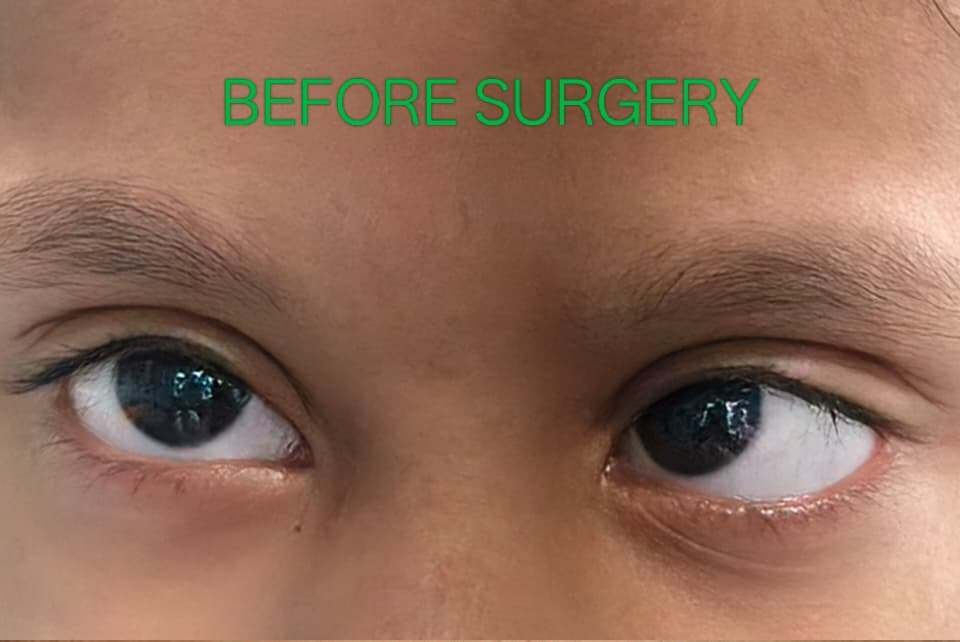
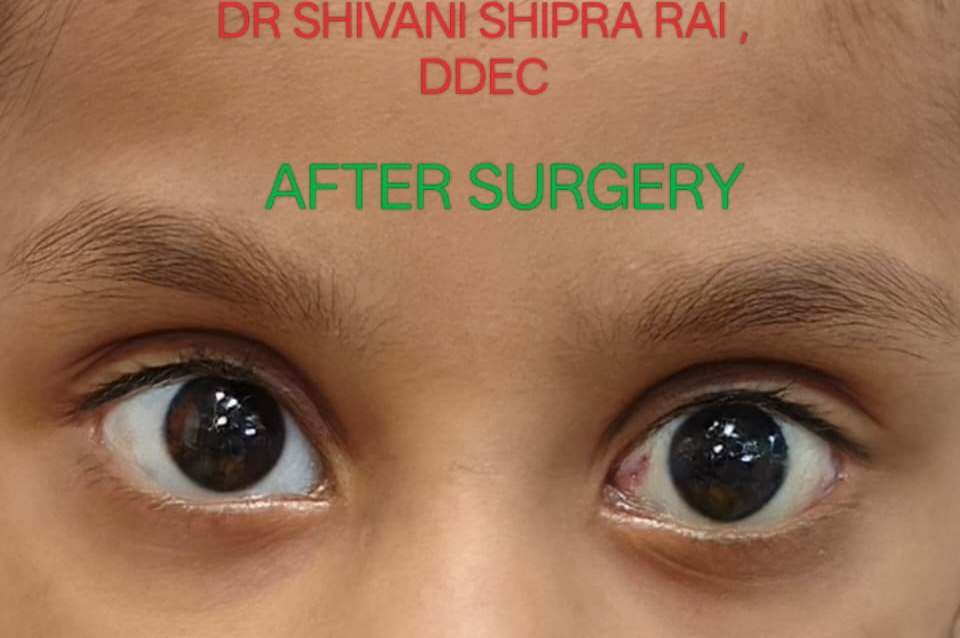
Esotropia or Inward deviation of eye
Esotropia or Inward deviation of eye causes lazy eyes if not treated from the start ..As soon as parents notice such a deviation in the eyes of their children , they should immediately see a squint specialist as delay in treatment can cause loss of vision. Patching from start and surgical correction at the earliest are essential for vision and binocular development
Before & After
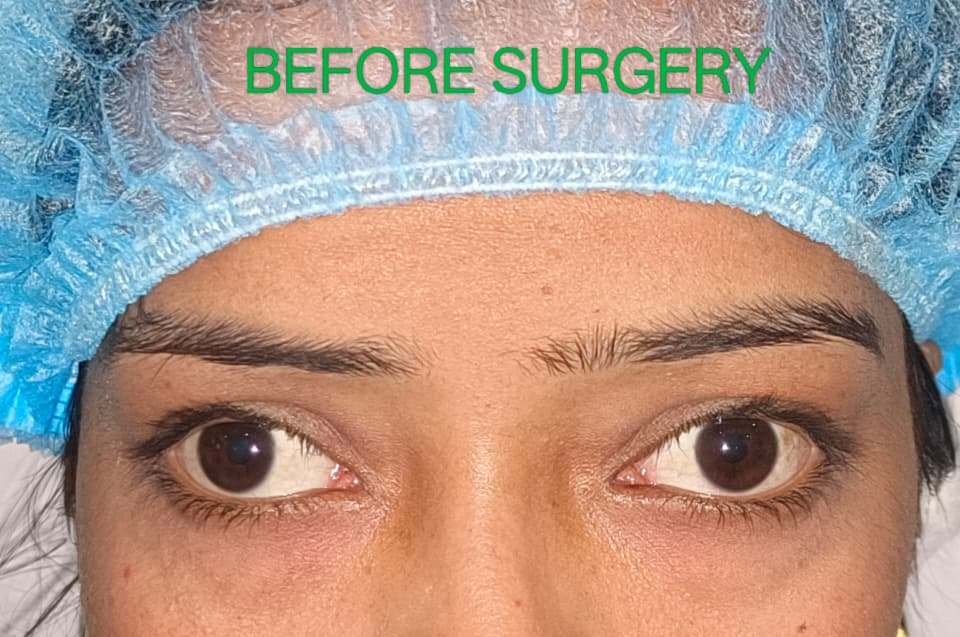
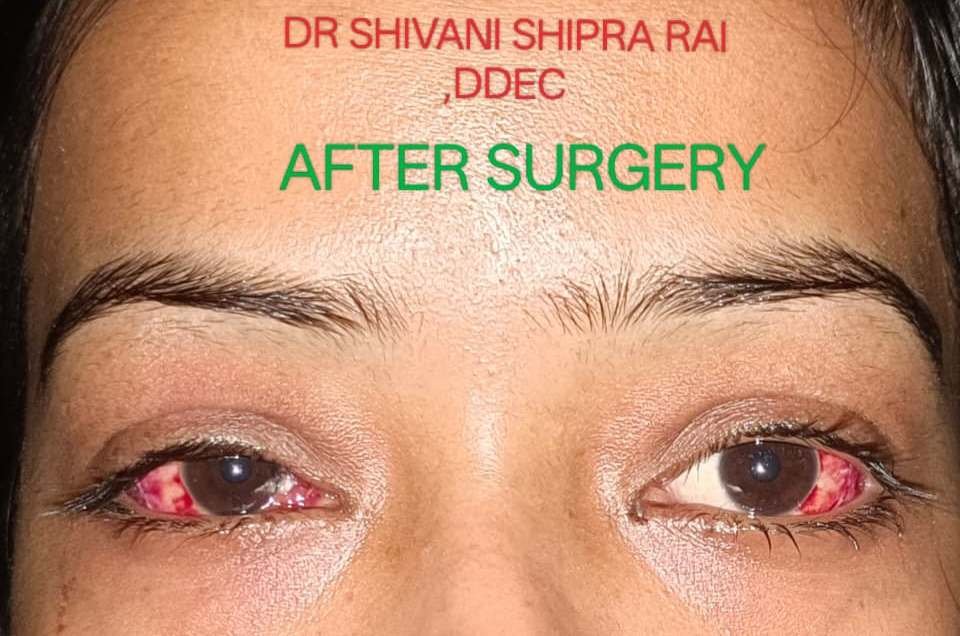
Exotropia or outward deviation of eye
Exotropia or outward deviation of eye can occur at any age Most commonly parents notice intermittent outward deviation that is most often the eyes are straight but occasionally the eyes deviate outward . Often it is associated with undiagnosed refractive errors which needs correction glasses immediately. Initial diagnosis and convergence exercises in intermittent variant can help maintain fusion .. In cases where the eyes are deviated outwards completely , surgical correction at young age helps maintain fusion and depth perception.
Before & After
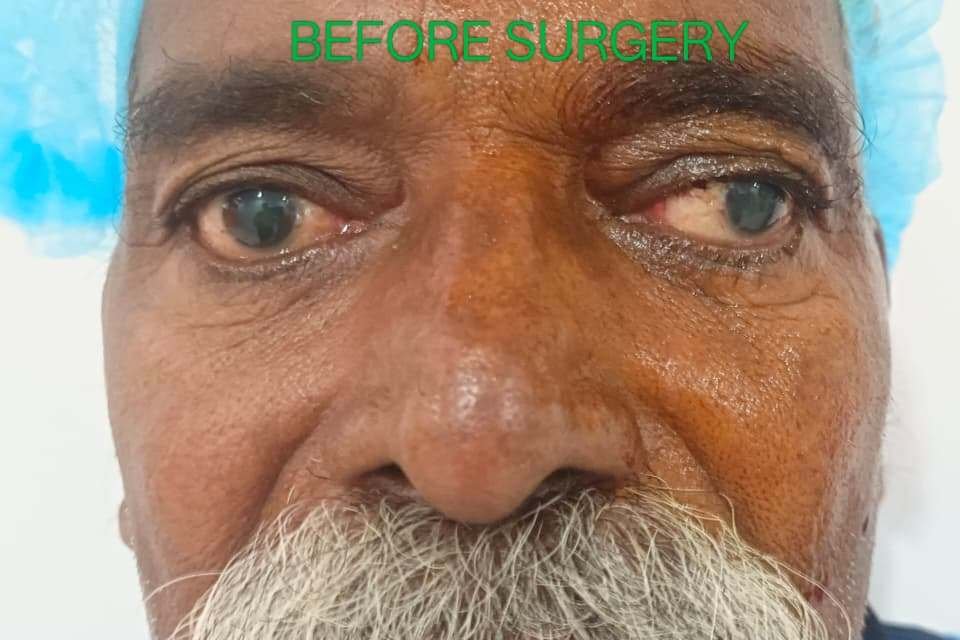
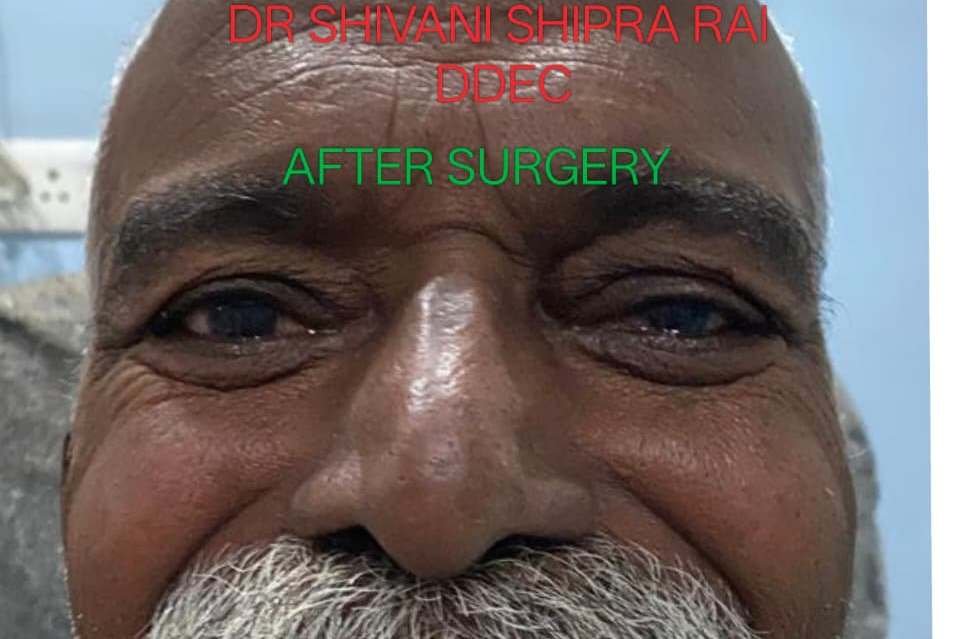
SQUINT CAN BE CORRECTED AT ANY AGE
A common misperception is that squint can be corrected only at a particular age Squint can be corrected at any age , if present from childhood , the earlier operated the better .. Lot of times squint appears later due to nerve palsies, low vision , retinal problems . Even at a later age , squint can be successfully corrected with no side effects .
Who Should Get Evaluated?
- Children whose eyes appear misaligned.
- Adults with a newly developed or worsening squint.
- Patients experiencing double vision.
- People noticing an eye turning in, out, up or down.
- Anyone concerned about abnormal eye alignment.
Why Early Assessment Matters
In children, untreated eye misalignment can sometimes be associated with reduced visual development in one eye. Early assessment helps identify vision problems and allows treatment to be planned at the appropriate time.
Adults with a new squint should also undergo an eye examination to determine the underlying cause.
Concerned About Squint?
Get a comprehensive eye evaluation and discuss the most suitable treatment option for your condition.
Contact Us